Leave Your Message
0%

When it comes to Electric Motors, boosting efficiency is kinda everything. John Smith from GreenTech Innovations put it simply: "Every bit of efficiency matters with Electric Motors." That kind of thinking really pushes engineers to keep tweaking and improving their designs. Even tiny tweaks can add up to big energy savings and honestly can totally change the game in motor tech.

But, let’s be real — hitting peak performance isn’t always a walk in the park. A lot of folks overlook regular maintenance, thinking it’s not that important. Some wait until their electric motors break down before doing anything, which isn’t the smartest move. That reactive way of handling things usually ends up costing more in the long run. If businesses could just stay a step ahead with some awareness and proactive measures, they’d be in a much better spot.

Getting how tricky this all can be actually sparks new ideas and innovations. Checking out the latest strategies and tips for electric motor gear can really reveal some hidden potential. Companies really need to invest in R&D to boost performance without sacrificing sustainability. Facing these challenges head-on not only helps improve efficiency but also shows a real commitment to smarter, greener tech in the world of electric motors.

Top 10 Electric Motor Tips for Maximum Efficiency?

Understanding Electric Motor Basics for Optimal Efficiency

Understanding electric motor basics is crucial for achieving optimal efficiency. Electric motors convert electrical energy into mechanical energy. A significant challenge faced by many industries is that over 30% of motor energy is wasted due to improper selection and maintenance.

Many factors influence efficiency. Sizing the motor correctly is vital. An oversized motor can consume up to 40% more energy than necessary. Regular maintenance is also essential. Lack of proper lubrication or worn-out bearings can drastically reduce performance. Studies show that motors that are not maintained can lose efficiency by as much as 10 to 20%.

Using variable frequency drives can help achieve better efficiency in motors. These drives adjust the motor's speed to match the load. A study revealed that implementing these drives could improve efficiency by up to 30%. Understanding the basics of electric motors enables informed decisions. Each industry must reflect on their specific needs to harness maximum efficiency.

Selecting the Right Electric Motor for Your Application

Selecting the right electric motorfor your application is crucial. Consider the type of load the motor will handle. Different loads require different Motor Types. A motor for a pump will not work well for a conveyor. It's essential to match the motor’s specifications with your requirements.

Next, think about the environment. Motors can be sensitive to dust, moisture, and temperature. An electric motor in a wet location needs proper sealing. Otherwise, it can fail prematurely. Pay attention to the efficiency rating. High-efficiency motors might cost more initially. However, they’ll save money on energy in the long run.

Do not overlook the size and weight of the motor. Make sure it fits in your designated space. A motor that is too heavy may need special mounting. Reflect on potential issues that could arise from choosing the wrong motor. Downtime or performance problems can be costly. Understanding your specific needs and constraints is vital for optimal motor selection.

Maintaining Electric Motors: Best Practices for Longevity

Maintaining electric motors is crucial for their longevity. Regular inspection helps identify any wear and tear. Check for loose connections and signs of overheating. These issues can lead to severe operational problems. For instance, loose wiring may cause faulty performance. Small mistakes could lead to larger repairs down the road.

Cleaning is another essential practice. Dust and dirt can accumulate within the motor. This buildup affects efficiency, especially in Dc Electric Motors. Use appropriate cleaning tools to avoid damage. A gentle brush or compressed air can do wonders. Don't ignore the importance of proper lubrication. A well-lubricated motor runs smoother and lasts longer.

Monitoring the temperature of your electric motor is vital. Overheating can signal underlying issues. Regularly check the thermal conditions during operation. If the motor runs too hot, investigate the cause. It could be a sign of internal failure. Understanding these nuances can significantly improve performance and lifespan. Every little detail matters.

Top 10 Electric Motor Tips for Maximum Efficiency

Utilizing Proper Sizing and Load Matching Techniques

Top 10 Electric Motor Tips for Maximum Efficiency?

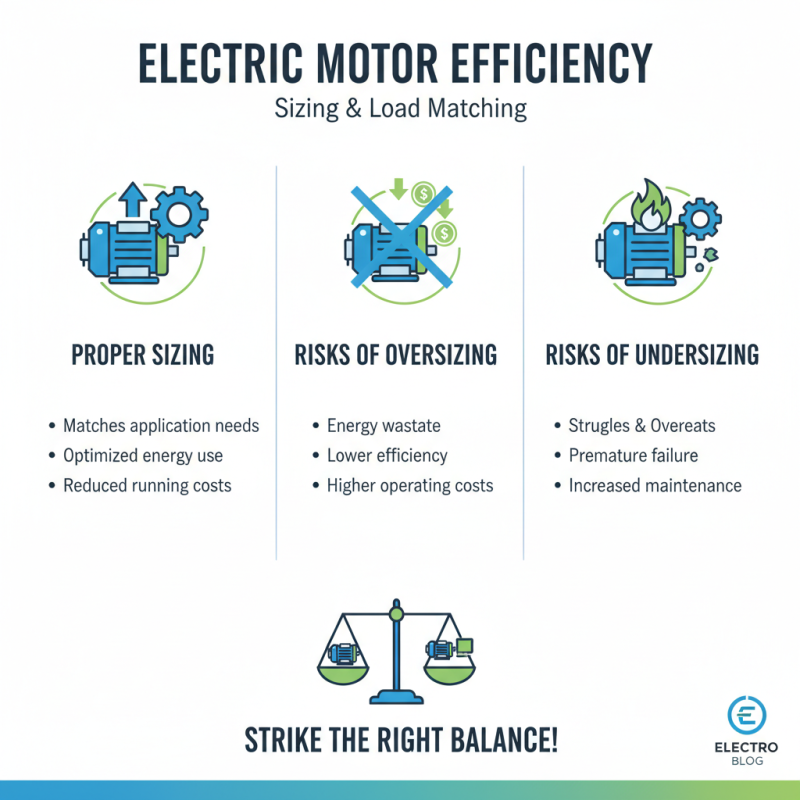
Proper sizing and load matching are crucial for the efficiency of electric motors. When choosing a motor, consider the specific application. Assessing the required torque and speed can prevent issues later. An oversized motor may waste energy. It might run with reduced efficiency, leading to higher operational costs. Conversely, an undersized motor may struggle, causing overheating or premature failure. Striking the right balance is essential.

Analyze the load characteristics thoroughly. Continuous and intermittent loads have different requirements. Matching the motor load accurately can enhance performance. For Electric Motors For Robots, precise calculations are vital. Robots often operate under varying loads, which adds complexity. Use of sensors can help in load adjustments. Regularly reviewing load data can pinpoint inefficiencies. However, mistakes can happen, leading to unexpected downtimes. Continuous learning from these situations is necessary to improve system designs.

In conclusion, prioritize a structured approach. Engage with real-world testing to gather data on efficiency. A systematic review of load matching and sizing can highlight areas needing change. Small adjustments can lead to significant improvements in energy use. Recognizing that every setup may have unique challenges is key to maximizing electric motor efficiency.

Improving Energy Efficiency with Advanced Control Systems

Electric motors are crucial in various industries. To improve their energy efficiency, advanced control systems play a vital role. These systems regulate power usage and optimize performance. They can adjust motor operations based on real-time data. This ensures motors run only when needed. Consequently, energy wastage is minimized.

One way to implement these systems is through variable frequency drives (VFDs). VFDs can match motor speed to load requirements. This approach prevents overuse of energy. It also allows for smoother operation. Engineers must evaluate the complexity of integration. Not all systems are compatible, leading to potential inefficiencies.

Another noteworthy consideration is regular maintenance. Even with advanced control systems, motors can underperform. Dust, vibrations, or misalignments could hinder efficiency. Regular checks can prevent small issues from escalating. Ignoring this could result in more significant failures. Emphasizing proactive care and using modern control systems can foster better efficiency.

Cooling Strategies to Enhance Electric Motor Performance

Effective cooling strategies are essential for enhancing electric motor performance. One common method is to use forced air cooling. This involves a fan that directs airflow across the motor's surface. It helps dissipate heat quickly, ensuring the motor operates efficiently.

Water cooling is another effective method. It circulates water through a jacket surrounding the motor. This method can maintain optimal operating temperatures. However, it can be complex to set up. Regular maintenance is crucial to prevent leaks.

One often overlooked approach is thermal insulation. Proper insulation materials can reduce heat loss. It’s surprising how this can improve efficiency. Although using insulation may seem simple, it requires significant planning.

When utilizing Electric Motors At Home, always consider your cooling approach. Many homeowners overlook the significance of proper cooling. A little research can go a long way. Carefully evaluating your setup might reveal areas for improvement.

Top 10 Electric Motor Tips for Maximum Efficiency - Cooling Strategies to Enhance Electric Motor Performance

Tip No. Cooling Strategy Description Expected Efficiency Gain (%)
1 Proper Ventilation Ensure adequate airflow around motor to dissipate heat. 5
2 Cooling Fans Install cooling fans to enhance air circulation. 10
3 Heat Exchangers Use heat exchangers to transfer heat away effectively. 15
4 Water Cooling Implement water cooling systems for high-load scenarios. 20
5 Insulation Apply insulation to reduce heat ingress. 8
6 Regular Maintenance Conduct routine checks and cleanings to maintain performance. 12
7 Temperature Monitoring Use sensors to monitor temperature and adjust operations accordingly. 7
8 Solar-Assisted Cooling Integrate solar energy for extra cooling support. 10
9 Correct Load Management Optimize load distribution to prevent overheating. 9
10 Upgrade Design Consider advanced designs for better airflow and heat dissipation. 18

Regular Monitoring and Diagnostic Tools for Efficiency Maintenance

Top 10 Electric Motor Tips for Maximum Efficiency?

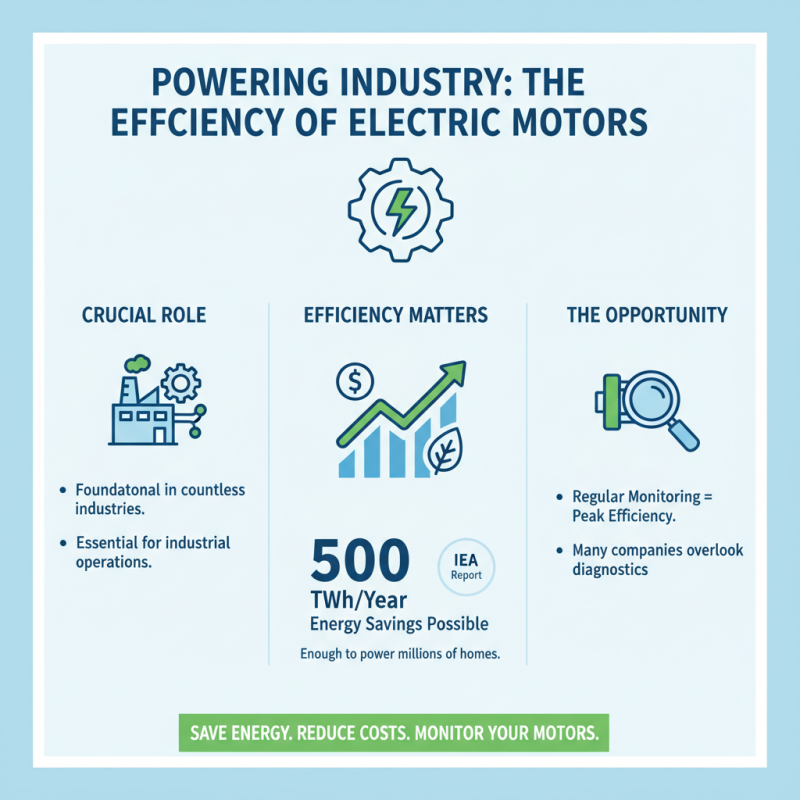
Electric motors play a crucial role in numerous industries. Regular monitoring of these motors is essential for maintaining efficiency. A report by the International Energy Agency found that improving motor efficiency could save up to 500 terawatt-hours per year. This is enough energy to power millions of homes. Yet, many companies overlook regular diagnostics.

Diagnostic tools can identify potential issues before they lead to failure. Vibration analysis and thermal imaging are effective methods. They help in spotting irregularities in motion or temperature that might indicate wear and tear. The truth is, many businesses wait until motors fail. This reactionary approach often leads to costly downtime and repairs.

Implementing a routine check can significantly enhance the performance of different Kinds Of Electric Motors. For instance, using data analytics can predict failures. This proactive approach increases uptime and productivity. However, not all facilities invest in such tools. Many still depend on outdated monitoring methods. Regular training on modern techniques is necessary. It's vital that companies don’t grow complacent; efficiencies can always be improved.

Exploring the Advantages and Applications of Brushless DC Motors: A Focus on 24V and 12V Permanent Magnet Solutions

Brushless DC motors (BLDC) have become increasingly popular in various applications due to their superior performance and efficiency compared to traditional brushed motors. Particularly, 12V and 24V permanent magnet solutions offer distinct advantages in specific applications, such as robotics, electric vehicles, and HVAC systems. The BLDC-60S model, operating at both 12VDC and 24VDC, exemplifies these benefits by delivering a no-load speed ranging from 2000 to 7000 rpm, which caters to diverse operational needs.

The efficiency of brushless motors, typically around 85-90%, surpasses that of brushed counterparts, where energy losses due to friction and heat generation are considerably higher. According to industry reports, the global brushless DC motor market is expected to grow significantly, fueled by advancements in applications such as automation and renewable energy systems. The reliability of BLDC motors is underscored by their long lifespan, reduced maintenance needs, and quieter operation, making them ideal for residential and commercial use.

Moreover, the ability to precisely control the speed and torque in brushless motors opens up new possibilities for designers seeking to optimize performance in complex systems. As industries lean towards more sustainable and efficient technologies, the demand for 12V and 24V brushless DC motors, like the BLDC-60S, is poised to rise, contributing to innovations that enhance both functionality and energy efficiency across a wide array of applications.

FAQS

: What is the main purpose of the product?

: The product aims to enhance user experience and provide effective solutions to common needs.

How do I use the product?

Use the provided instructions for setup. Follow the steps carefully for best results.

Can I return the product if I am not satisfied?

Yes, returns are accepted within a specific timeframe. Check the return policy for details.

Is there customer support available?

Yes, customer support is available to assist with any questions or concerns.

Are there any known limitations of the product?

Some users report minor issues with specific features. Reflecting on user feedback can help improve usage.

How do I maintain the product?

Regular cleaning is recommended. Ensure proper storage to extend the product’s lifespan.

What should I do if I experience a malfunction?

Troubleshooting steps are provided in the manual. If problems persist, seek professional assistance.

Will the product work in various conditions?

The product is designed for specific conditions. Using it outside these conditions may lead to issues.

Can the product be used by everyone?

It is suitable for most users. However, certain individuals might find it challenging.

What are common mistakes users make?

Some forget to follow the guidelines closely. Always double-check for best practices.

Conclusion

Electric motors play a crucial role in various applications, making their efficiency vital for optimal performance. Understanding the basics of electric motors is essential for maximizing their potential, which begins with selecting the right motor tailored to specific needs. Regular maintenance and adherence to best practices can significantly extend the lifespan of electric motors, while proper sizing and load matching techniques ensure they operate effectively.

Moreover, implementing advanced control systems can further improve energy efficiency, paired with cooling strategies that enhance overall performance. Regular monitoring and diagnostic tools are indispensable for maintaining efficiency over time, allowing for timely interventions and adjustments. By following these tips, users can ensure their electric motors run at peak efficiency, ultimately leading to energy savings and enhanced productivity.
Sophia

Sophia

Sophia is a dedicated marketing professional at Yueqing Fuxi Electronic Commerce Co., Ltd., where she leverages her extensive expertise to drive the success of the company's product offerings. With a keen understanding of the e-commerce landscape, Sophia consistently creates and updates......
Previous The Evolution of Brushed DC Electric Motors in Modern Industry