Leave Your Message
0%

When it comes to modern engineering and automation these days, choosing the right motor can really make a big difference in how smooth and efficient your project turns out. Out of all the options out there, DC Motor Gear Motors are definitely worth considering—they’re pretty versatile and pack quite a punch for a bunch of different uses. Basically, they combine the simplicity of DC motors with the mechanical advantage of gear systems, which means better performance and more precise control.

One of the biggest perks of these motors is how well they can handle fine-tuned speed and torque control. That makes them perfect for tasks where precision isn’t just a bonus—it's kind of a must-have. You'll see these motors popping up a lot in robotics, car systems, and various industrial applications. As tech keeps moving forward, there’s a growing need for motion control systems that are both reliable and efficient. That’s why DC Motor Gear Motors are becoming more and more important for innovative designs.

All in all, getting a good grip on the main benefits of these motors can really help engineers and project managers make smarter choices based on what they need. Checking out what these motors can do might open up new opportunities for creativity and efficiency in your next project—pushing things forward in this ever-changing tech world.

Top Advantages of DC Motor Gear Motors for Your Next Project

Benefits of Using DC Motor Gear Motors in Various Applications

DC motor gear motors have gained significant traction across various industries due to their numerous advantages. One notable benefit is their capability to provide High Torque at low speeds, which is especially important in applications such as robotics and automated machinery. According to a recent report by MarketsandMarkets, the demand for electric motors is expected to reach USD 180 billion by 2025, largely fueled by the versatility and efficiency of DC motors. This ensures that projects seeking reliable performance won’t be constrained by speed limitations, making them ideal for tasks that require precise movement, like conveyor systems and robotic arms.

Furthermore, the compact design of DC motor gear motors allows for easy integration into space-constrained applications. The combination of a motor with a gearbox results in a more efficient power transmission system, reducing energy losses during operation. Citing data from the International Energy Agency (IEA), the efficiency of these motors can exceed 90% when properly designed, which significantly contributes to energy savings, especially in applications that require continuous operation, such as HVAC systems and industrial automation. In addition, their low maintenance needs and operational longevity make them a cost-effective solution for various engineering projects.

Understanding the Mechanism of DC Motor Gear Motors

DC motor gear motors combine the benefits of direct current (DC) motors with the efficiency of gear systems, making them an ideal choice for various applications ranging from robotics to conveyor systems. Understanding the mechanism behind these gear motors begins with recognizing that they consist of a DC motor coupled with a gearbox. The gearbox reduces the motor’s speed while simultaneously increasing its torque, allowing devices to perform heavier tasks with less energy consumption. Reports suggest that systems utilizing gear motors can achieve efficiency improvements of up to 20%, a significant advantage in energy-sensitive applications.

Moreover, the precise control offered by DC motor gear motors is essential in modern automation processes. By adjusting the voltage, the speed and torque can be finely tuned to meet specific operational requirements. According to data from industry analysis, over 45% of machinery in the manufacturing sector benefits from such mechanisms, where precise positioning and consistent torque are crucial. Their ability to maintain performance under variable load conditions further enhances reliability, a critical factor for engineers designing systems meant to operate continuously.

The compact nature of DC motor gear motors also facilitates their integration into limited spaces, allowing for innovative designs without compromising on power. Industry reports indicate that nearly 60% of new robotic designs are favoring gear motors for their compactness and high efficiency. As projects evolve towards miniaturization and advanced automation, understanding the intricacies of DC motor gear motors becomes paramount for engineers looking to optimize performance while adhering to space constraints.

Top Advantages of DC Motor Gear Motors for Your Next Project

Advantage Description Application
High Torque DC motor gear motors provide high torque at lower speeds, making them ideal for heavy loads. Conveyor systems, lifting equipment
Speed Control Easy to control the speed by adjusting voltage, enhancing flexibility in various applications. Robotics, automated systems
Compact Design The integrated gear reduction means a smaller overall design, suitable for space-constrained environments. Drones, compact robots
Cost-Effective Generally more affordable than other motor types with similar performance metrics. Consumer electronics, toys
Reliability DC motor gear motors have a reputation for durability and reliability over prolonged use. Industrial machinery, automotive applications

Key Features of DC Motor Gear Motors for Enhanced Performance

DC motor gear motors offer a range of features that significantly enhance their performance, making them an excellent choice for various applications across industries. One of the most notable features of these gear motors is their ability to provide high torque at low speeds. This is particularly important in applications where precision and control are paramount. According to a report by Grand View Research, the global DC motor market is expected to grow significantly, driven by the rising demand for automation in manufacturing processes. The integration of gear systems with DC motors allows engineers to optimize their designs, ensuring that equipment operates efficiently and with minimal energy loss.

Another key feature of DC motor gear motors is their compact size and lightweight design, which make them ideal for applications where space is limited. Their ability to fit into tight spaces without compromising performance is supported by data from Research and Markets, which indicates that miniaturization in electric motor technology is a growing trend. Additionally, the efficiency of these motors can lead to lower operational costs, as they require less power consumption while delivering enhanced torque capabilities. This balance of size, efficiency, and power makes DC motor gear motors an attractive choice for robotics, automotive systems, and other cutting-edge technologies that demand reliable and effective performance.

Comparative Analysis: DC Motor Gear Motors vs. Standard Motors

Top Advantages of DC Motor Gear Motors for Your Next Project

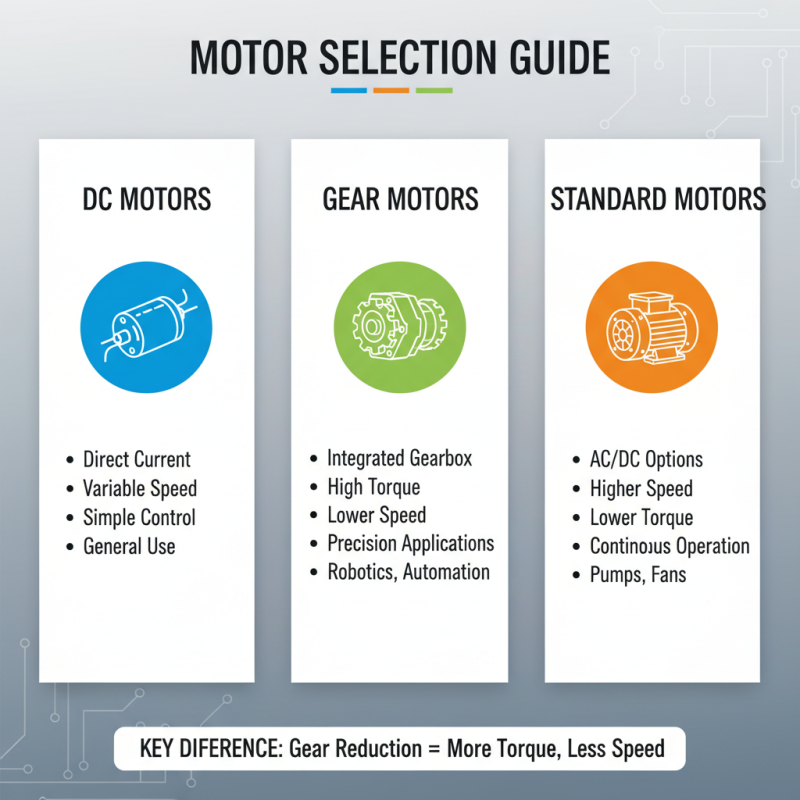
When comparing DC motor gear motors to standard motors, several critical factors emerge that can substantially influence the selection process for various projects. One primary difference is the integration of gear reduction systems in gear motors, which facilitates increased torque output while maintaining a lower speed. This characteristic makes gear motors exceptionally suitable for applications that demand high power and precision, such as robotics and automated machinery. In contrast, standard motors typically operate at higher speeds without the added benefit of enhanced torque, which may limit their applicability in scenarios requiring sustained force or exact positioning.

Additionally, the efficiency of DC motor gear motors is another advantage that distinguishes them from standard motors. Gear motors often exhibit improved energy efficiency, as the gear system can optimize the power conversion process, ensuring that more energy is converted into usable work. This efficiency can lead to reduced operational costs over time, especially in battery-powered applications where energy conservation is paramount. Standard motors, while sometimes more straightforward in design, often fall short in energy efficiency when high torque is necessary, making gear motors the preferred option for projects where performance and cost-effectiveness are crucial.

Factors to Consider When Selecting DC Motor Gear Motors

When selecting DC motor gear motors for your next project, several critical factors should be taken into consideration to ensure optimal performance and suitability for your application. One of the foremost aspects is the required torque and speed. Understanding the load and the functional requirements will guide you in choosing a motor that can deliver the necessary force without compromising efficiency. It's essential to calculate the desired speed and the torques involved in your application to avoid underperformance.

Another significant factor is the physical dimensions and weight constraints of your project. Often, compact designs require specific sizes of gear motors that can fit within limited spaces while still providing adequate power output. Carefully measure the available space and select a DC gear motor that balances size with the power requirements of your application.

**Tips**: Always consider the operating environment as well. If the motor will be exposed to dust, moisture, or extreme temperatures, it's crucial to choose one with suitable protection ratings. Additionally, examining the gear ratio can lead to better control over the speed and torque optimization, helping to tailor the performance further to meet your project's needs.

In conclusion, balancing these considerations will help you to select the right DC motor gear motors, ensuring your project operates efficiently and reliably.

Top Advantages of DC Motor Gear Motors

Common Applications of DC Motor Gear Motors in Industry

DC motor gear motors are widely utilized in various industrial applications due to their versatility and efficiency. One common application is in robotics, where they drive movement in robotic arms and autonomous vehicles. According to a report by Research and Markets, the global robotics market is projected to grow by over 26% from 2021 to 2026, reflecting the increasing demand for precision and reliability that DC motor gear motors offer. Their ability to provide high torque at low speeds makes them ideal for tasks that require careful control, such as pick-and-place operations and assembly line functions.

Another critical application area for DC motor gear motors is in automation systems, especially in sectors like food processing and packaging. The Food Automation Market is expected to reach $23.5 billion by 2026, according to a report by Mordor Intelligence. Gear motors contribute significantly to this growth by enabling efficient material handling and positioning, ultimately increasing production throughput while reducing labor costs. Their design allows for seamless integration with conveyor systems and other machinery, crucial for industry 4.0 advancements.

Tips: When selecting a DC motor gear motor for your project, consider both the torque and speed requirements specific to your application. Ensure that the motor's performance specifications align with your project goals to optimize efficiency and effectiveness. Furthermore, evaluating factors such as gear ratio and power consumption can greatly enhance the sustainability and longevity of your machinery in industrial settings.

Maintenance Tips for Maximizing the Longevity of Gear Motors

Top Advantages of DC Motor Gear Motors for Your Next Project

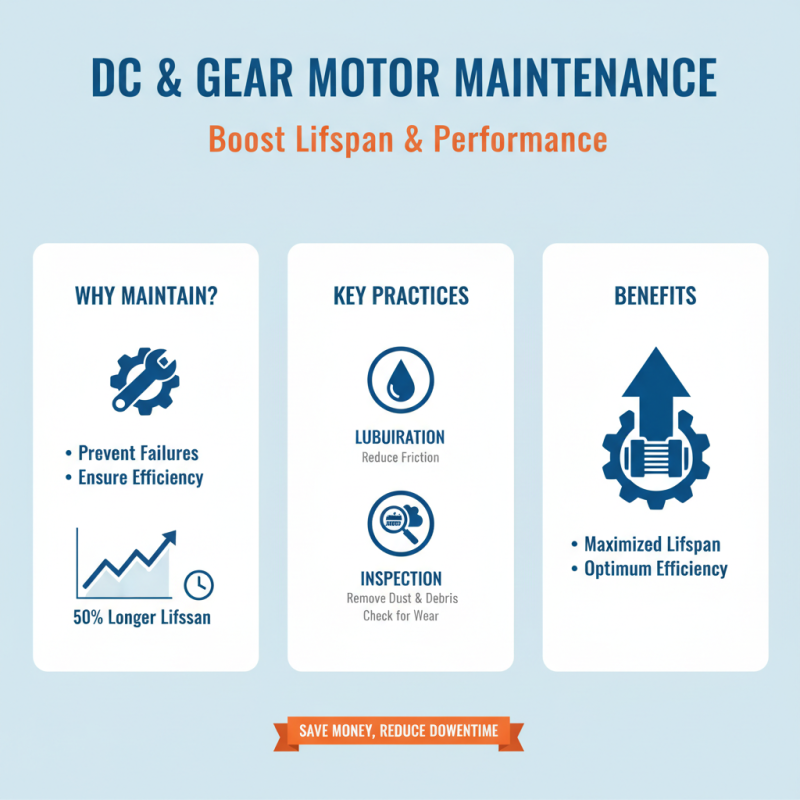
When utilizing DC motor gear motors in your projects, understanding maintenance practices is essential for maximizing their lifespan and performance. Regular upkeep not only prevents unexpected failures but also ensures optimum efficiency. According to a recent industry report, equipment that undergoes routine maintenance can last up to 50% longer compared to units that are neglected. This highlights the importance of integrating a solid maintenance strategy for gear motors.

One crucial maintenance tip is to regularly check and replace lubricants. The right lubrication minimizes friction between moving parts, which is essential for smooth operation. A study indicated that inadequate lubrication can lead to a 30% increase in wear on components, potentially resulting in premature motor failure. Additionally, inspecting gear teeth for wear and calculating backlash at regular intervals can prevent serious operational issues down the line.

Another important practice is to monitor the temperature and load conditions. Overheating can significantly shorten the life of a DC motor gear motor, especially if it operates under high load conditions for extended periods. The general guideline suggests conducting thermal checks during operation to ensure temperatures remain within the recommended range; exceeding this can negatively impact insulation and motor windings, ultimately leading to failure. By incorporating these maintenance tips, you can enhance the longevity and reliability of your DC motor gear motors in any application.

FAQS

: What are the key features of DC motor gear motors that enhance their performance?

: DC motor gear motors provide high torque at low speeds, compact size, and lightweight design, making them ideal for applications requiring precision and control. They also offer improved energy efficiency, leading to lower operational costs.

How do DC motor gear motors compare to standard motors?

DC motor gear motors integrate gear reduction systems for increased torque at lower speeds, making them suitable for applications needing high power and precision, unlike standard motors, which typically operate at higher speeds and may have limited torque.

Why are DC motor gear motors considered efficient?

The gear systems in DC motor gear motors optimize the power conversion process, enhancing energy efficiency and converting more energy into usable work, thus reducing operational costs, particularly in battery-powered applications.

What maintenance practices can maximize the longevity of DC motor gear motors?

Regular maintenance practices include checking and replacing lubricants, inspecting gear teeth for wear, monitoring temperature, and ensuring load conditions are within recommended limits to prevent premature motor failure.

How often should lubricants be checked and replaced in gear motors?

Lubricants should be checked regularly, as proper lubrication minimizes friction and wear on components, which is essential for optimal performance and longevity of the gear motors.

What impact does overheating have on DC motor gear motors?

Overheating can significantly shorten the life of a DC motor gear motor, especially under high load conditions, affecting insulation and motor windings, which can ultimately lead to motor failure.

What is the recommended approach for inspecting gear teeth?

Regularly inspect gear teeth for signs of wear and calculate backlash at intervals to prevent serious operational issues and maintain efficient functionality of gear motors.

How can routine maintenance extend the lifespan of gear motors?

Equipment that undergoes routine maintenance can last up to 50% longer than neglected units, emphasizing the importance of a solid maintenance strategy for DC motor gear motors.

Conclusion

DC Motor Gear Motors offer a wide array of advantages for various applications, making them a popular choice in many industries. Their unique mechanism allows for increased torque and efficiency, which enhances performance compared to standard motors. Key features, such as compact design and precise speed control, further illustrate their suitability for specific project requirements.

When considering the selection of DC Motor Gear Motors, factors such as load requirements and environmental conditions should be evaluated. Common applications include robotics, automation, and transportation systems. To maximize the longevity of these gear motors, regular maintenance practices are essential. Understanding these aspects will facilitate better decision-making for engineers and project managers looking to implement DC Motor Gear Motors effectively in their projects.

Ethan

Ethan

Ethan is a dedicated marketing professional at Leqing Fuxi E-Commerce Co., Ltd., where he plays a crucial role in driving the company’s online presence and brand visibility. With a strong proficiency in digital marketing strategies, Ethan specializes in crafting engaging content that resonates with......
Previous The Evolution of Brushed DC Electric Motors in Modern Industry